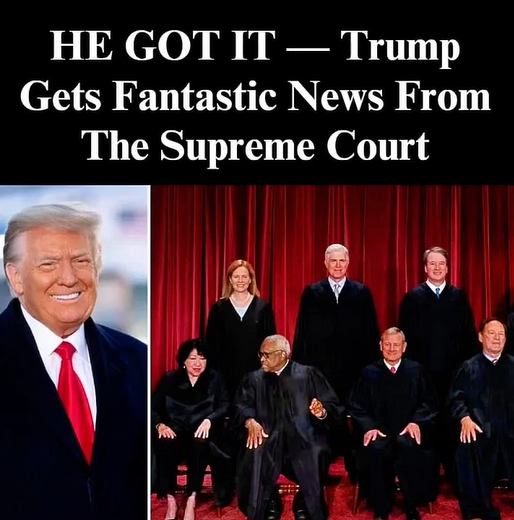
Supreme Court Issues Key Rulings on Capitol Riot Charges, Homelessness, and Emergency Abortion Access
In a significant decision Friday, the U.S. Supreme Court ruled in favor of a former police officer facing charges related to the January 6, 2021, Capitol riot. The decision may have broader implications for similar cases, including one involving former President Donald Trump.
By a 6–3 vote, the Court sided with Joseph Fischer, who was charged under a federal law designed to prevent obstruction of official proceedings. The justices ruled that the law, created under the 2002 Sarbanes-Oxley Act following the Enron scandal, was originally intended for cases involving tampering with physical evidence—not general actions during protests or riots.
Although Fischer still faces six other charges, the Court sent the obstruction case back to a lower court for further review. Legal experts say the ruling may complicate prosecutors’ use of this charge in similar cases, but it doesn’t immediately clear other legal hurdles for defendants.
Meanwhile, the Court also delivered a ruling on homelessness, deciding 6–3 that a city in Oregon did not violate the Constitution by prohibiting people from sleeping outdoors on public property. The justices found that the Eighth Amendment’s protection against “cruel and unusual” punishment does not prevent local governments from enforcing public camping bans, even against individuals without permanent housing.
Justice Neil Gorsuch, writing for the majority, emphasized that public policy decisions around homelessness belong to lawmakers, not federal courts. However, in her dissent, Justice Sonia Sotomayor argued that the decision leaves vulnerable individuals with no viable options. “Stay awake or be arrested,” she wrote, summarizing what she described as the harsh reality facing many.
In another closely watched case, the Court ruled Thursday that, for now, doctors in Idaho must be allowed to perform emergency abortions under federal guidelines—even though the state has strict abortion restrictions. The ruling allows doctors to comply with a federal law requiring hospitals to provide stabilizing care during emergencies.
The Court reversed an earlier stay and declined to move forward with a full review at this time. The case is expected to continue in lower courts and may return to the Supreme Court in the future.
Justice Samuel Alito criticized the Court’s move, calling it “baffling” and expressing frustration that the justices avoided a definitive ruling on the issue, despite extensive arguments and legal briefs already submitted.
These three major decisions come as the Court nears the end of its current term, highlighting the range of complex issues—legal, social, and medical—that continue to shape national debate and the future of American law.