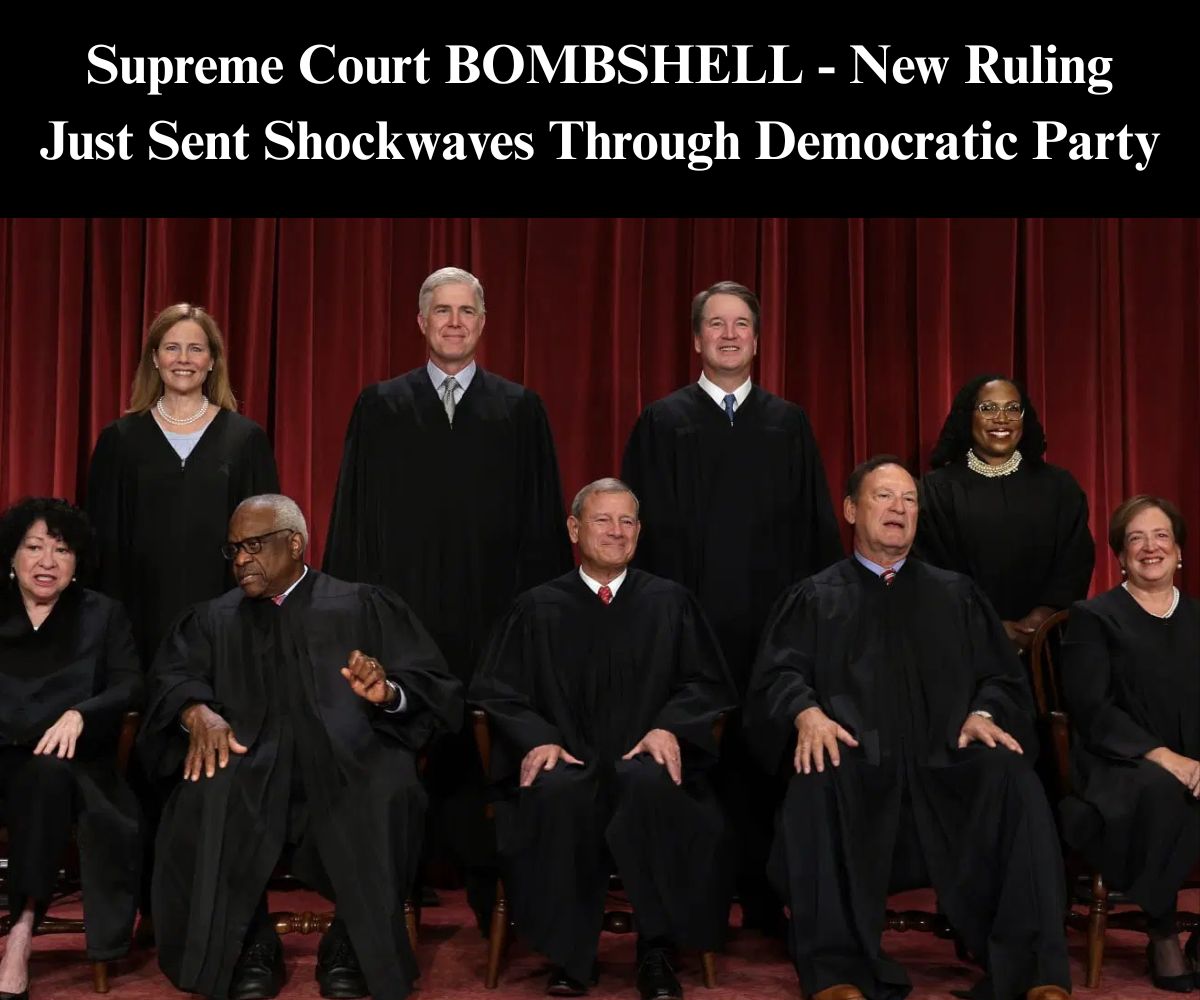
The U.S. Supreme Court has signaled it will take up the question of whether race can continue to be used in drawing voting maps, setting the stage for a high-stakes legal battle with sweeping implications for congressional districts across the country, particularly those with large minority populations.
Expanding the scope of a case already on its docket from Louisiana, the Court announced it will hear arguments challenging whether the 1965 Voting Rights Act still justifies the intentional creation of majority-Black or majority-Hispanic districts.
The outcome could not only reshape dozens of congressional maps, but also reverberate through state and local legislative boundaries, potentially altering the electoral landscape at every level of American government, Bloomberg News reported.
Currently, the U.S. House includes 11 majority-Black and 31 majority-Hispanic districts, according to a Bloomberg News analysis of the latest U.S. Census data.
The timing is critical, the outlet reported.
Republicans in Texas are moving forward with an unusual mid-decade redistricting effort aimed at carving out an additional three to five GOP-leaning districts. Meanwhile, Democrats in states like California and New York have signaled they may reopen their own maps in response. These efforts could prove decisive in the battle for control of the House, where a Democratic majority would have the power to block President Donald Trump’s legislative agenda and launch aggressive investigations into his administration.
For decades, the Supreme Court has interpreted the Voting Rights Act to require, under certain conditions, the creation of majority-minority districts as a safeguard against voter suppression tactics that once plagued Black communities in the South—such as poll taxes, literacy tests, and intimidation.
But conservative justices on the court have increasingly questioned whether those protections remain constitutionally justified today, with some critics noting that the current legal framework still relies on findings from 1982, despite Congress reauthorizing the law in 2006.
Originally, the court was expected to decide the Louisiana case by the end of its term in June. But in a rare move, the justices opted on June 27 to hear additional arguments and expand the legal scope of the case.
At the center of the dispute is Louisiana’s 2022 congressional map, which added a second majority-Black district following a lower court’s finding that the state—home to a 33% Black population and six congressional seats—likely needed another such district to comply with the Voting Rights Act. The resulting 6th District stretches 250 miles from Shreveport to Baton Rouge, threading through predominantly Black areas.
The new map preserved Republican strongholds, including the district of House Speaker Mike Johnson, while enabling Democrat Cleo Fields to win the new seat.
Although the Supreme Court allowed the map to be used in the 2023 election, a separate group of plaintiffs—describing themselves as “non-African Americans”—challenged it in a new lawsuit, arguing the redistricting relied too heavily on race and violated the Constitution’s equal protection clause.
A three-judge panel sided with the challengers and blocked the map, but the Supreme Court later reinstated it, saying the lower court’s decision came too close to the 2024 election to take immediate effect.
The high court will now weigh whether the contested map can remain in place for the remainder of the decade. During oral arguments in March, some conservative justices raised constitutional concerns about race-based districting. However, Justice Brett Kavanaugh—a potential swing vote—suggested that the plaintiffs may have weakened their case by failing to raise certain arguments earlier in the process.
A ruling is expected sometime next year, likely too late to directly affect the 2026 election. Nonetheless, the Court’s willingness to revisit the issue could influence how states draw their maps in the interim, potentially accelerating efforts to eliminate majority-minority districts before a final decision is issued, Bloomberg noted.
The Bloomberg analysis, based on citizen voting-age population and 2022 election data, notes that both Alabama and Louisiana added second majority-Black districts for the 2024 cycle due to court orders, while North Carolina may have eliminated one.