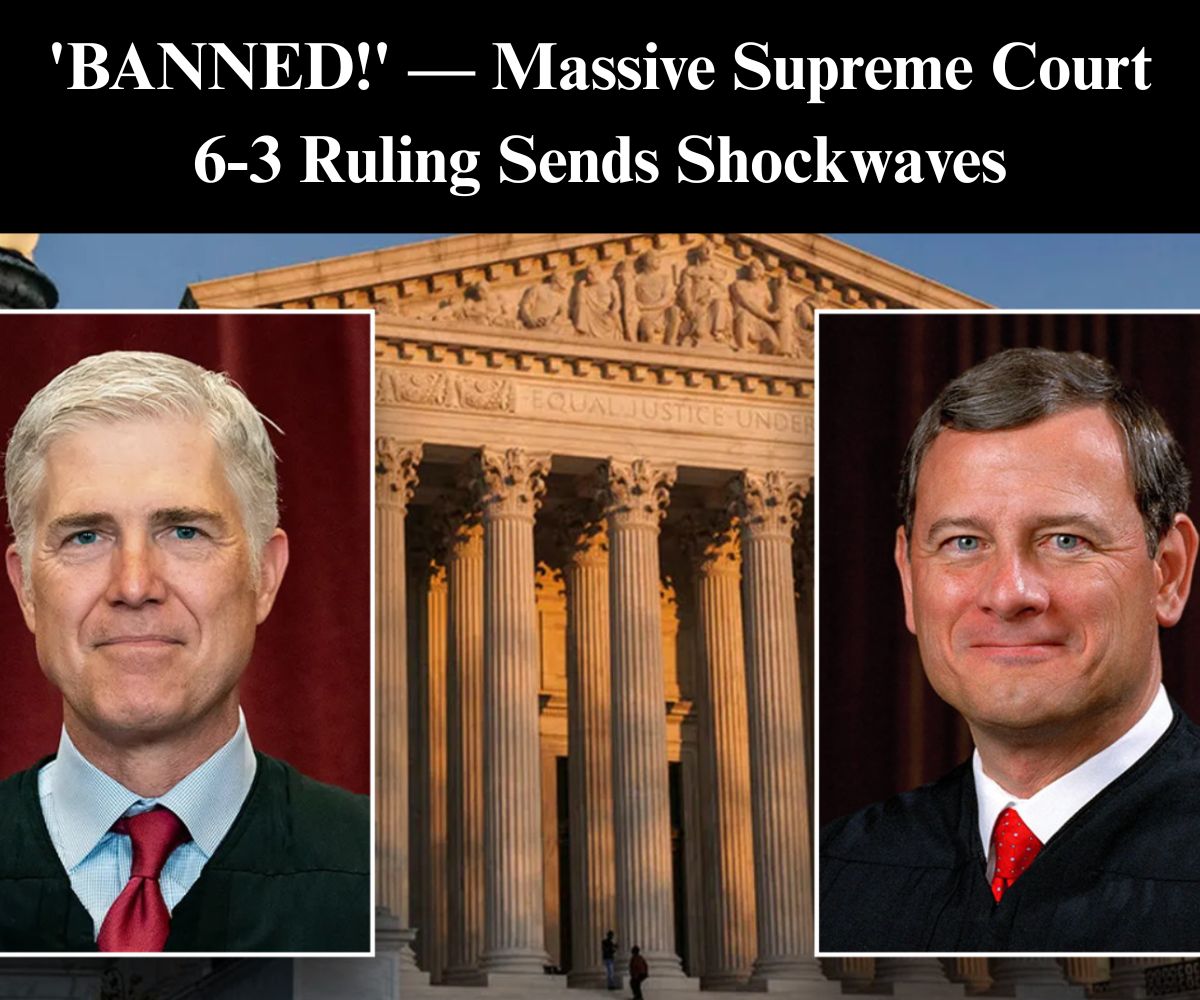
The Supreme Court on Wednesday upheld Tennessee’s ban on transgender surgery for minors in a landmark 6-3 decision, a ruling that strengthens efforts by conservative state lawmakers to protect children from irreversibly altering their bodies.
Since 2020, Republican-led states have enacted numerous laws regulating the lives of transgenders, particularly focusing on minors. President Donald Trump, who campaigned on ending what he called “transgender lunacy,” also took steps to reverse the Biden administration’s policies that many saw as harmful to children.
About half of the states in the U.S. have enacted bans similar to the one in Tennessee. Federal courts have been divided over the constitutionality of such laws, and the Tennessee case, brought by the Biden administration, was the first to reach the Supreme Court.
The 6-3 majority opinion was authored by Chief Justice John Roberts and joined by the other five conservative justices. The three liberal justices dissented.
“This case carries with it the weight of fierce scientific and policy debates about the safety, efficacy, and propriety of medical treatments in an evolving field,” Roberts wrote. “The voices in these debates raise sincere concerns; the implications for all are profound. The Equal Protection Clause does not resolve these disagreements.”
Going forward, the court’s ruling means that judges reviewing bans like Tennessee’s—and potentially other similar restrictive laws—will apply the lowest standard of judicial review, making it more likely that such laws will be upheld.
Tennessee’s SB 1 prohibits hormone therapy and puberty blockers for transgender minors and imposes civil penalties on doctors who violate these restrictions. The law also bans gender-affirming surgeries, although that aspect was not challenged in the case. The legislation went into effect in 2023.
Specifically, the law prohibits providers from administering such care if the purpose is to enable “a minor to identify with, or live as, a purported identity inconsistent with the minor’s sex,” or treat “purported discomfort or distress from a discordance between the minor’s sex and asserted identity.”
SB 1 was originally challenged by three transgender minors in Tennessee, along with their parents and a state doctor who treated minors for gender dysphoria. The Biden administration later joined the lawsuit, and lower federal courts issued conflicting rulings regarding the law’s constitutionality, CNN reported.
The case reached the Supreme Court weeks after Trump’s reelection, during an election cycle in which he intensified his promise to further restrict civil rights for transgender individuals in the final days of his campaign. Shortly after taking office, the Trump Justice Department informed the high court that it would no longer support the challengers to Tennessee’s law, reversing the position held by the Biden administration, the outlet added.
A divided court of appeals in Cincinnati in 2023 allowed the ban to take effect.
A central question before the Supreme Court was whether the law constitutes discrimination based on sex—a determination that would subject it to stricter judicial scrutiny under the 14th Amendment. The Biden administration argued that, under the state’s law, a child born female would be eligible for puberty blockers and estrogen for certain medical conditions, whereas a child born male would be denied those treatments to live as a trans-female.
The argument partially relied on the landmark 2020 Supreme Court decision in Bostock v. Clayton County, which held that federal law prohibiting workplace discrimination “because of sex” also extends to protect gay and transgender employees. The 6-3 ruling notably divided the court’s conservative justices.
Tennessee countered that its law is based on age, not sex, and specifically prohibits the use of these drugs for the purpose of facilitating gender transition. The state maintained that it has a compelling interest in “encouraging minors to appreciate their sex” and asserted its authority to regulate medical treatments.
That argument appeared to resonate with the Supreme Court justices during oral arguments in December, CNN said.