The U.S. Supreme Court sided with the Trump administration on Friday in its bid to restrict national injunctions against the president’s birthright citizenship executive order, while litigation on the issue continues.
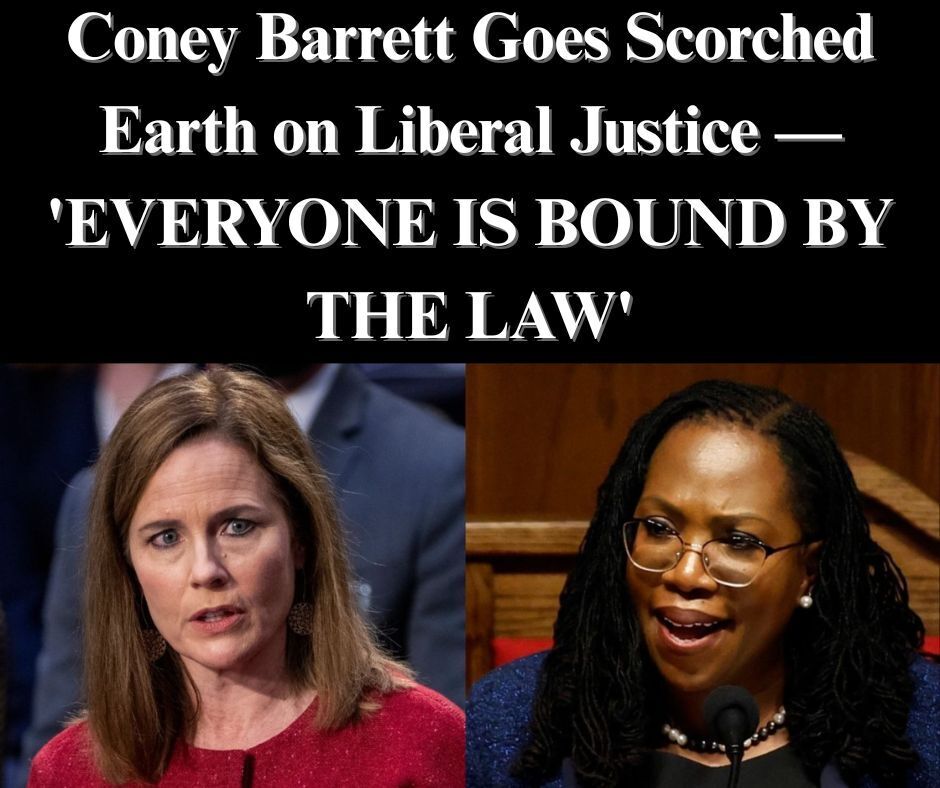
Justice Amy Coney Barrett wrote the majority judgment for the court, which voted 6-3 on the issue. Justice Sonia Sotomayor dissented, and Justices Elena Kagan and Ketanji Brown Jackson supported her position.
In her opinion, Barrett wrote: “Some say that the universal injunction ‘give[s] the Judiciary a powerful tool to check the Executive Branch.’ … But federal courts do not exercise general oversight of the Executive Branch; they resolve cases and controversies consistent with the authority Congress has given them. When a court concludes that the Executive Branch has acted unlawfully, the answer is not for the court to exceed its power, too.”
Barrett also juked Jackson, a Biden nominee, from orbit.
“We will not dwell on Justice Jackson’s argument, which is at odds with more than two centuries worth of precedent, not to mention the Constitution itself. We observe only this: Justice Jackson decries an imperial Executive while embracing an imperial Judiciary,” Barrett wrote.
“In other words, it is unecessary to consider whether Congress has constrained the Judiciary; what matters is how the Judiciary may constrain the Executive. JUSTICE JACKSON would do well to heed her own admonition: ‘[E]veryone, from the President on down, is bound by law.’ That goes for judges too,” she added.
The U.S. Supreme Court has issued its ruling on President Trump’s early executive order ending birthright citizenship for the children of illegal immigrants.
Trump has scored a big win in the Birthright Citizenship Case.
Not on the merits, but on whether a universal injunction is permitted. This is hugely significant for every case involving universal injunctions.
Senior Legal Correspondent Margot Cleveland explained what this means, “US Supreme Court allows Trump’s executive order restricting birthright citizenship to go into effect in some areas of the country for now by curtailing federal judges’ ability to block the president’s policies nationwide.”
The Supreme Court heard oral arguments in the case in May after three lower federal courts issued nationwide injunctions against the order’s implementation.
In an executive order signed on Inauguration Day, Trump declared that the 14th Amendment provision granting U.S. citizenship to children born on American soil applies only to those with at least one parent who is a citizen or permanent resident.
If it were to be implemented, Trump’s policy would deny citizenship at birth to an estimated 255,000 babies born annually in the U.S. to illegal immigrants or temporary visa holders, according to the Migration Policy Institute.
Under the 14th Amendment, ratified in 1868, “all persons born or naturalized in the United States, and subject to the jurisdiction thereof, are citizens of the United States.” For over a century, this text has been interpreted to grant citizenship at birth to all individuals except for children of foreign diplomats, the WSJ reported.
But proponents of Trump’s order argued that the historical context of the amendment was to grant citizenship to the children of former slaves and that the provision has since been abused by illegal migrants who exploit it to gain a foothold in the U.S. by having a child on American soil.
Trump’s executive order is also based on the argument that illegal immigrants are not “subject to the jurisdiction” of the U.S. for citizenship purposes, meaning their children should not be granted citizenship at birth.
The White House asserts that the citizenship clause was designed to overturn the Supreme Court’s infamous 1857 decision in Dred Scott v. Sandford, which ruled that black people could not be citizens, but did not extend citizenship to foreigners without permanent legal residency.